Feature 1: Strong vertical directivity
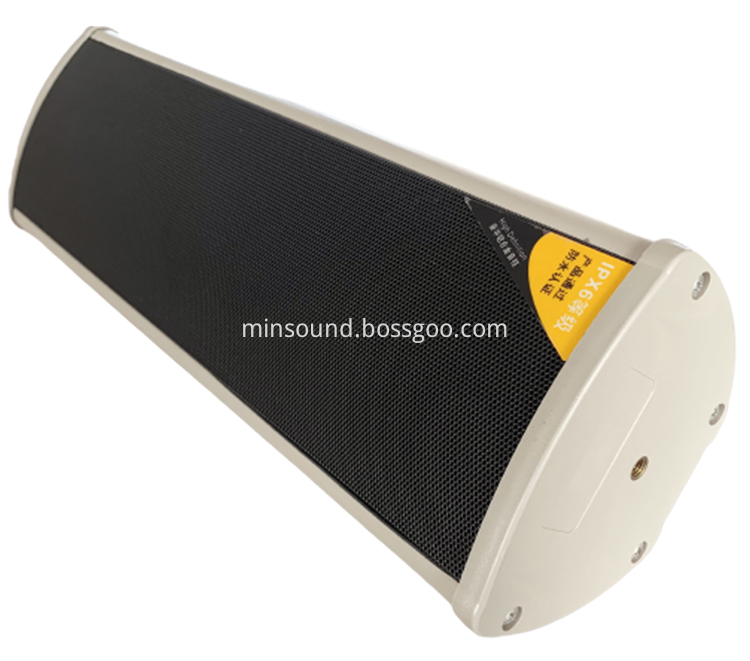
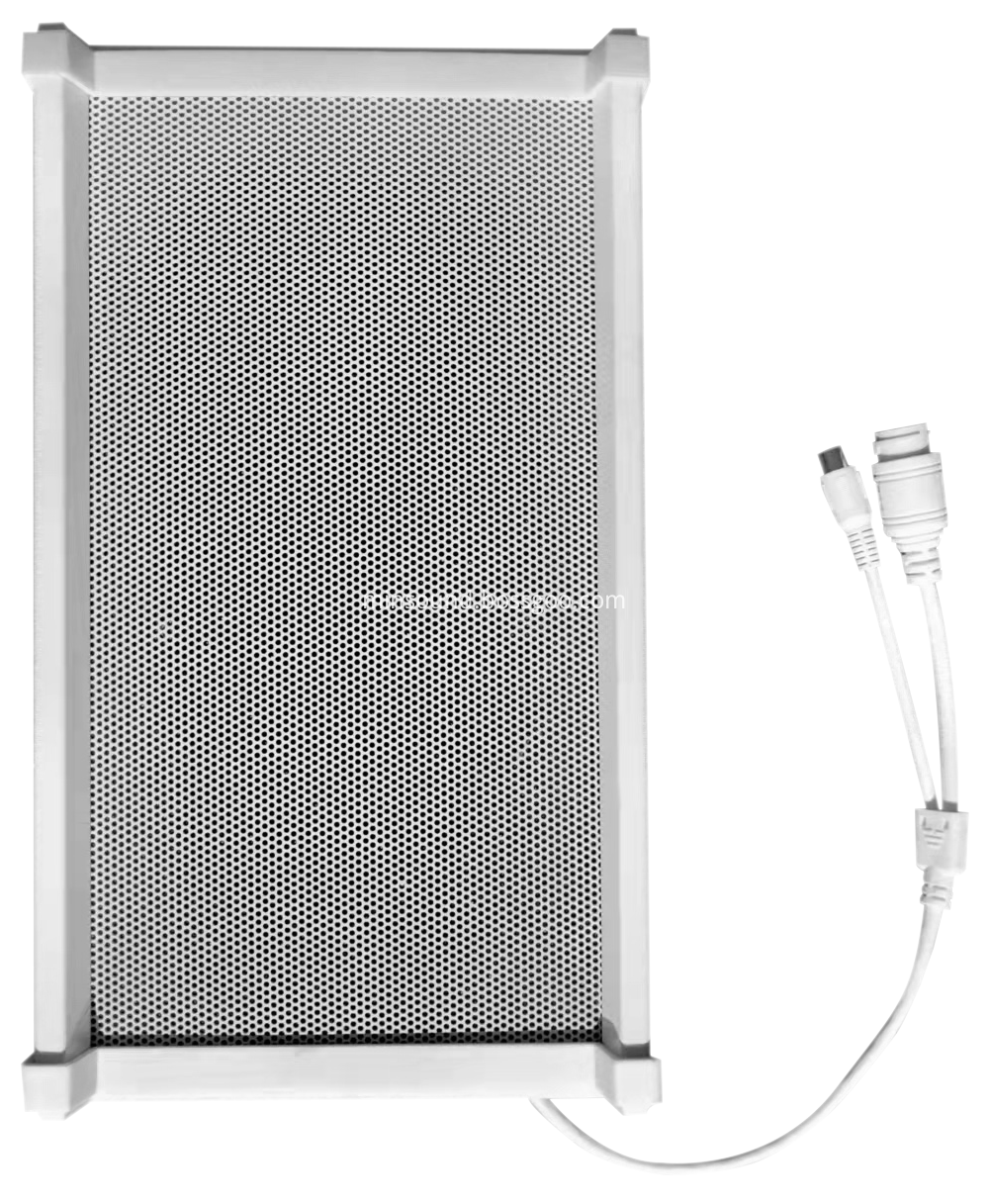
Column speakers can be said to be miniaturized and portable for professional line array audio systems. The directivity of the sound column is similar to that of a single speaker in the horizontal direction, but is greatly improved in the vertical direction. It propagates in a wave mode in the horizontal direction, but has a strong directivity in the vertical direction, forming a "plate"-shaped three-dimensional radiation effect.
Install the sound column near the entrance of the stage, and point the "sound plate" to the audience. The sound beam radiates to the back row of the auditorium with strong sound energy, and the front row is affected by the phase difference caused by the vertical distance of the speakers. Attenuation, the sound pressure may be lower than that of a single speaker, which makes the direct sound distribution of the sound field tend to be uniform. The horizontal direction of the sound column should not be "clustered", and there should be a large horizontal radiation angle, so that the sound field can be relatively uniform in the left and right directions.
Column speakers usually refer to 4~10 paper cone speakers arranged in a straight line. The characteristic is that when transmitting the sound in the horizontal direction, the radiation angle of the speaker is the same as the radiation angle of a speaker, and when transmitting the sound in the vertical direction, the radiation angle of the speaker increases with the combination of the speakers, especially in high-frequency sound. , the sound beam can be sent out in a certain direction.
Column-type speakers are quite effective at controlling the sound vertically. In environments with severe reverberation, column speakers can effectively concentrate the sound to the audience and reduce the occurrence of rebound after reaching the wall.
The characteristic of the sound column is that it has strong directivity in the vertical direction. The longer the sound column, the narrower the sound beam, the more concentrated the energy, and the stronger the directivity. When the length of the sound column is fixed, the higher the frequency, the narrower the sound beam and the stronger the directivity.
Feature 2: High sensitivity and long sound radiation distance
The sound column can be formed into a variety of specifications according to different structures. The smaller the "sound disk" area, the stronger the beam-forming effect and the sharper the directivity, and the sensitivity on the axis is much higher than that of a single speaker. The sound axis efficiency of the sound column on the main shaft is higher than that of a single speaker. Generally speaking, the greater the number of speakers that make up the sound column, the higher the sensitivity on the main axis and the farther the sound radiates. Reasonable control of the suspension height and depression angle of the sound column can make the sound field more uniform and clear. Since the total rated power of the sound column is several times that of a single speaker, and at the same time due to the focusing effect in the direction of the sound axis, the sensitivity is doubled, which is more effective for long-distance sound reinforcement.
Compared with a single speaker, the low frequency radiation efficiency of the sound column is greatly improved, thereby increasing the low frequency response and enriching the sound. Using the directional characteristics of the sound column, placing the microphone outside the main sound beam (that is, the upper and lower directions of both ends of the sound column emit the lightest sound), at the position where the sound pressure is the weakest, can improve the whistling phenomenon and improve the sound transmission gain. In places with long reverberation time, the use of sound columns can greatly improve the clarity of the sound.
Feature 3: Small and beautiful, does not occupy a lot of space
Compared with traditional speakers, the shape of the sound column is smaller, and it is mostly used in some occasions with special requirements for audio equipment, such as conference halls and studios that need to hide audio, and need to cooperate with indoor beautiful program recording sites, home theaters, etc. Due to the small size of the sound column, it is easy to integrate with the environment, and it is generally suitable for customers who like simple style.
How to improve the frequency response of the sound column?
The directivity of the sound column decreases as the frequency decreases. That is, the directivity at low frequencies is poor. Therefore, the vertical directivity of the sound column should be improved, that is, the directivity at high frequencies is weakened, and the directivity at low frequencies is increased. Usually, the sound column can be divided into high and low frequency bands, and then connected to a crossover network, so that the long sound column emits low-frequency sound, and the short sound column emits high-frequency sound to improve its frequency response. Or use some methods commonly used in important venues to separate the sound with a high-frequency horn speaker in the frequency band above 1KHz to improve the high-frequency directivity and high-frequency timbre.
Using the principle of acoustic filter, a layer of sound-absorbing material (such as ultra-fine glass wool) with a gradually changing thickness is covered on the sound column panel, using its characteristics of large sound absorption for medium and high frequency, and the larger the thickness, the better the sound absorption effect. The sound column is thickened at both ends and gradually thinned in the middle. The effective length of the sound column is related to the frequency and becomes shorter as the frequency increases, thereby improving the frequency response of the sound column.
Change the shape of the sound column to a concave or convex shape, so that the high-frequency main sound beam spreads out. The shape method is the simplest and is used more. But unfortunately, the bass frequencies don't go as straight as the treble frequencies, and the spread is wider. In a space with a severe reverberation environment, the wider diffusion angle of the bass frequency may cause the sound to interfere with each other, and the sound clarity will be deteriorated. When the microphone and the speaker are placed in the same room, echo whistling may also occur.
How to improve the horizontal direction of the sound column?
In addition to some defects in the directivity of the sound column in the vertical direction, which need to be improved by the above methods, there are also problems in the horizontal directivity. These problems can be solved with the help of a tone controller or an equalizer. By reducing the volume of the bass frequencies, it helps the speech sound clear, but has a negative effect on the reproduction of the music. The installation angle of each speaker on a single speaker can also be based on the principle of sound wave diffraction. The speaker hole on the sound column box panel can be opened into a rectangular slit to improve the horizontal direction of the high frequency band.