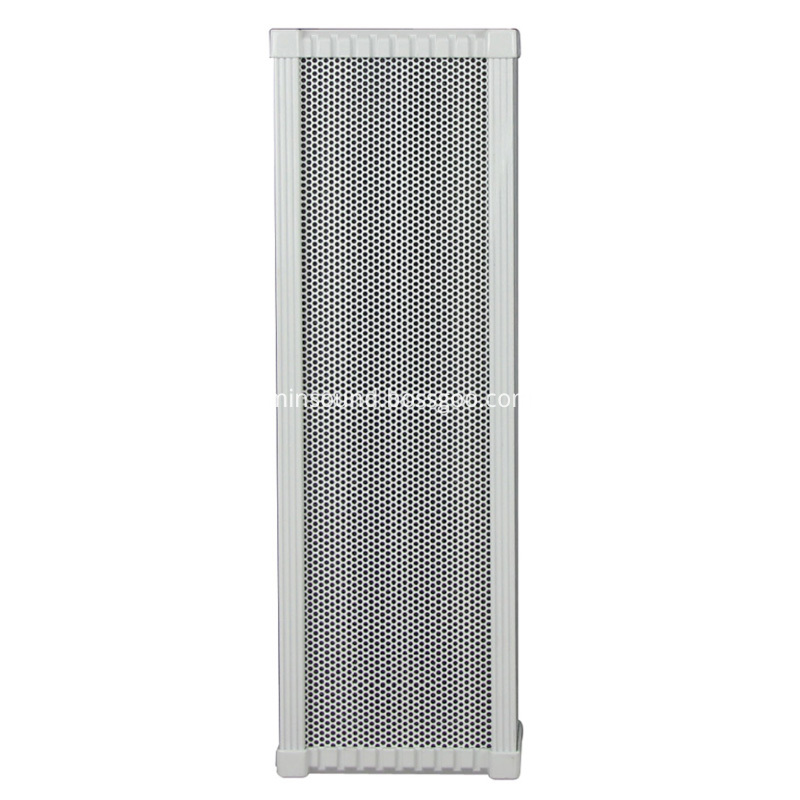
When we use the microphone, if the microphone is too close to the speaker or facing the speaker, and the volume of the power amplifier is turned on relatively large, it is easy to produce high-frequency sound feedback and cause howling, causing the tweeter to burn out, because the middle and high frequencies pass through the frequency divider. Most of the signals are sent from the tweeter. This high-energy signal all passes through the tweeter with an extremely thin coil, generating an instantaneous large current, causing an instantaneous extremely high temperature, blowing the voice coil wire, and the tweeter is making a whine sound. It broke after screaming. The correct way is to use the microphone not close to or facing the speaker unit, and the volume of the power amplifier should be gradually increased from small to large.
The loudspeaker will be damaged if the volume is too high, but the more likely situation is that the power of the power amplifier is insufficient and the loudspeaker is turned on hard, so that the output of the power amplifier is not a normal sine wave, but a signal with other clutter components, which will burn out the speaker. .
It is recommended that friends who like high volume must buy high-power amplifiers. Small amplifiers below 30W will easily burn out low-impedance loudspeakers when the volume is too high.
If the power amplifier has a DC output, it will definitely burn the woofer, and even a very small number of tweeters will burn. Because there is no capacitor on the subwoofer (or other) speaker crossover circuit to isolate DC, once there is a DC output, it is like passing DC power into the speaker, and even the crossover coil is burnt to black. Therefore, when purchasing a power amplifier, you must pay attention to using the current range of a multimeter to measure whether the output terminals of the pre-stage and the post-stage have DC output.
There will be no DC output in the rear stage of the tube with an output transformer, but pay special attention to the high frequency oscillation or interference of the tube machine. Once this happens, your advanced speaker will be burned immediately.