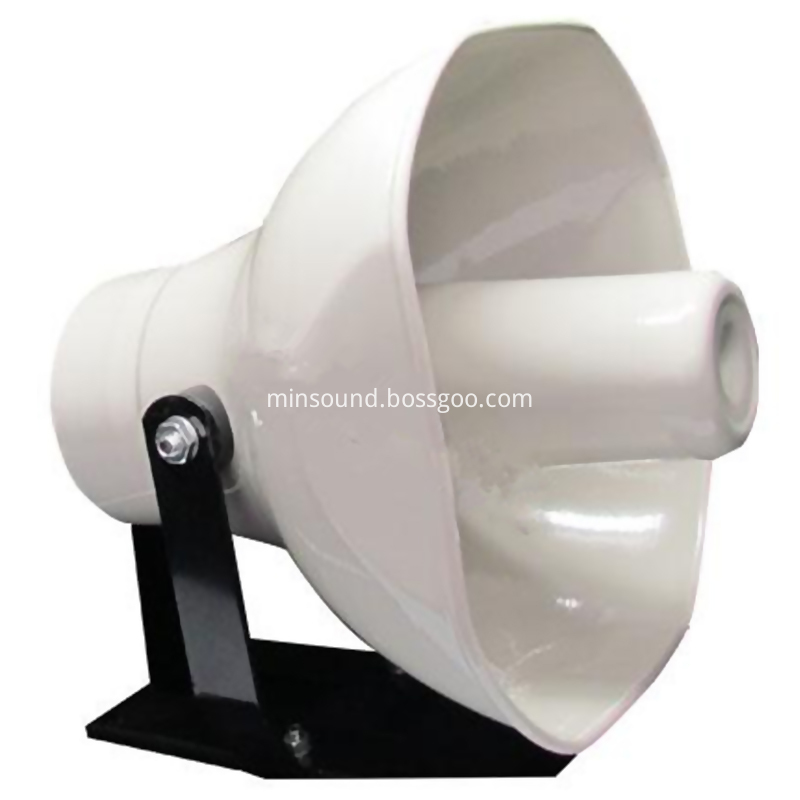
Definition of Reliability and Scope of Application horn speaker reliability is defined as: "The ability of a speaker horn product to perform a specified function within a specified number of parts and within a specified time." It is the time and quality index of PA loudspeaker products after factory, which is used to describe whether the loudspeaker horn is easily damaged and reliable in the process of use. With the improvement of user requirements, the loudspeaker horn structure is more and more complex (such as car loudspeaker), the output power ratio is more and more large (such as PA loudspeaker), the use of more and more harsh environment (such as outdoor loudspeaker), will lead to the reliability level of loudspeaker products decline. At the same time, if the use of new materials, new technology or new technology, the unreliable factor of the PA loudspeaker will increase.
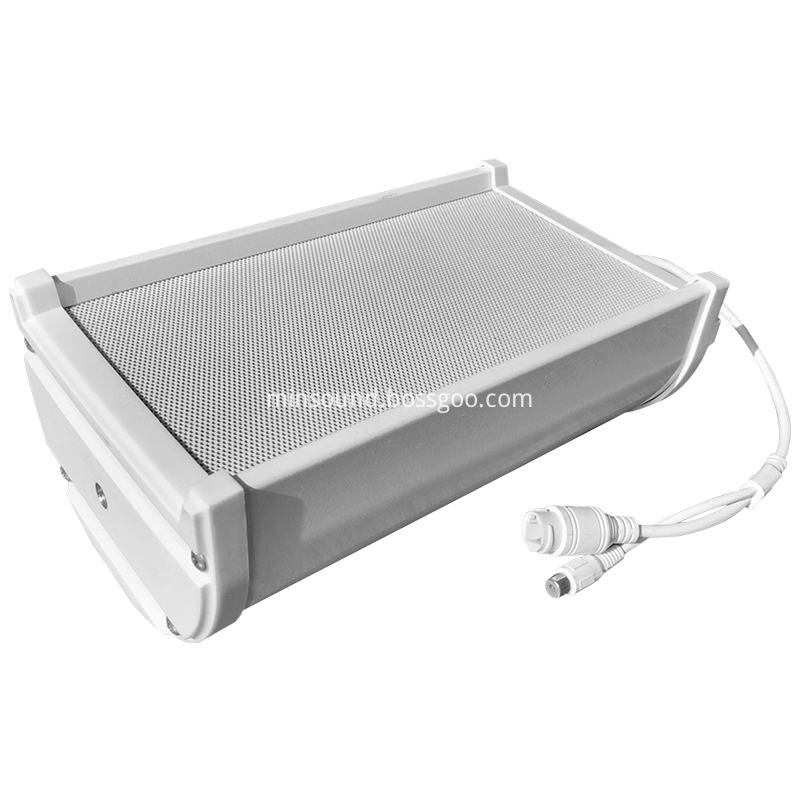
Loudspeaker reliability can also be defined as: "The number of failures allowed for a loudspeaker product under specified conditions and within a specified time." The mathematical expression is the mean time between failures (MTBF). It can be considered that random failure is inevitable and acceptable, and the reasons leading to failure are design reasons or manufacturing processes. As long as they are within the allowed number, they are usually not tracked further. Therefore, as early as 1995, the international community began to question the traditional definition of reliability and the old idea that random failure is inevitable, and at the same time began to implement the physical method of failure in reliability engineering.
The "prescribed conditions" in the definition of reliability determine a wide range of reliability, and the reliability of products is closely related to the working state, service conditions and environmental conditions of storage and transportation. Conditions can be divided into two categories: usage conditions and ambient conditions. Service conditions refer to the stress conditions operating inside the product, including various electrical stresses, chemical stresses and physical stresses. Environmental conditions include various environmental stress conditions, such as temperature, humidity, air pressure, harmful gases, mold, salt spray, shock, vibration, and radiation. In this sense, environmental test also belongs to the category of reliability test. These stress conditions can be applied individually or in combination, which will have a more significant impact on the reliability of loudspeaker products.
Reliability technique
The purpose of derating design is to reduce the basic failure rate by making the stress of key components which have great influence on loudspeaker reliability lower than the conventional level. Derating design is widely used in loudspeaker system design. In the design of loudspeaker unit, the idea of derating design is reflected by the use of large area of positioning support parts, large aperture of voice coil, lead and lead molding design.
Because of the cost, the design of loudspeaker or loudspeaker system does not fully reflect the idea of redundancy design. The application of multi-strand braided wires or the use of dual positioning struts may reflect some redundant design ideas.
Thermal design
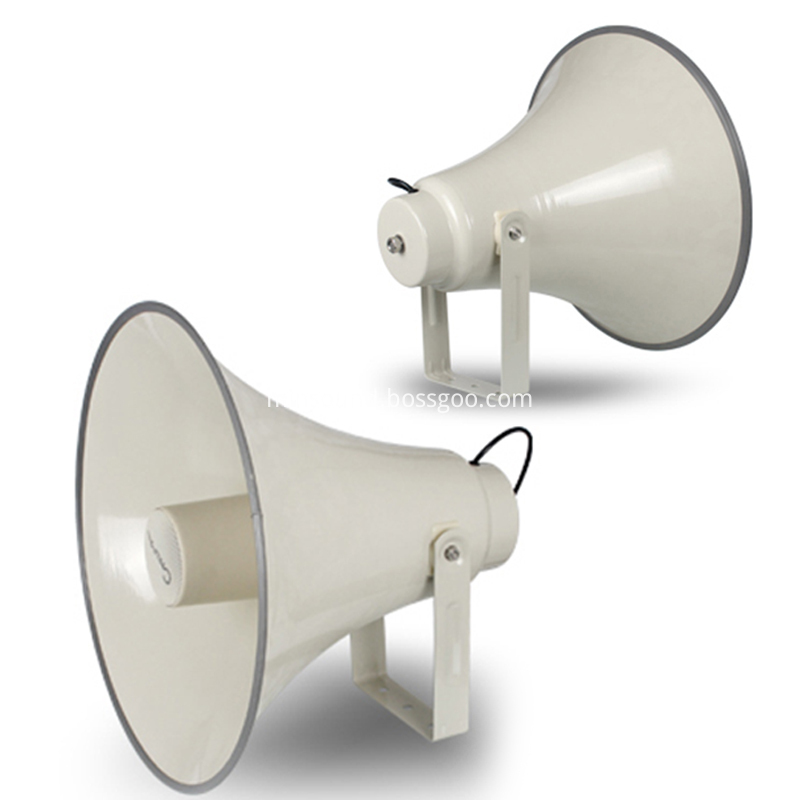
The failure rate of the loudspeaker will increase with the rise of the working temperature. In order to reduce the failure rate, the operating temperature must be reduced. Henrikson theoretically discussed the heat conduction mechanism of loudspeaker [41]. The main cause of loudspeaker heating is the heat of the sound library. Therefore, to reduce the working temperature of loudspeaker, we can start from reducing the heat of the voice coil and improving the heat dissipation of the voice coil and magnetic circuit. The heat measurement of the loudspeaker is as follows :(1) the heat dissipation channel is designed by the pole core, the positioning bracket, the basin frame, the paper cone root and the l on the voice coil frame. At the same time, attention should be paid to prevent airflow noise caused by poor design. (2) Use magnetic fluid to improve the heat dissipation capacity of the voice coil.