
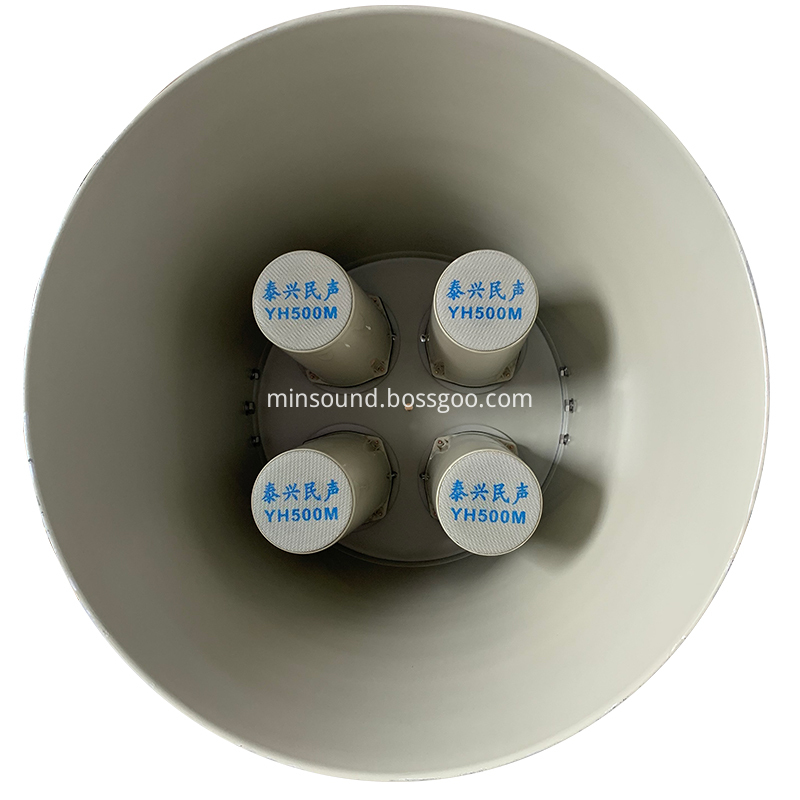
First of all, the mechanical damage is discussed: simply speaking, it is the applicable scope of the power and input imbalance it bears. Each unit has a certain bearing power design, for example, the average bearing power is 150 watts, when the rated power is 500 watts, what will happen to the unit? Of course, such a large average power intrusion first destroys the mechanical balance of the design, forcing the voice coil to leave the magnetic gap, and destroying the damping at the edge of the paper basin and the damping of the reed. After the high power disappears after Z, the voice coil cannot automatically return to the origin, which is what we call mechanical damage.
"If you choose the right horn speaker, each horn speaker has its scope of application and can only withstand 150WRMS. Why should we give him 500WRMS?"
Another reason for loudspeaker horn damage is overheating damage: overheating damage is caused by the burning of voice coil wire due to high temperature, which is believed to be caused by high power. But in fact, the more important reason is "audio overheating and damage". We all know that distortion is the natural enemy of sound reinforcement projects. Therefore, another theory of voice coil burning proposed here is not necessarily high power, but probably normal power. If the rated power is 150 watts, the voice coil diaphragms will still be blown out - distortion will cause it to be blown out.
How to prevent distortion is a university problem. If distortion does not occur, it will be a great blessing to the audience. In theory, there are many methods to prevent distortion, but in fact, it can not fundamentally solve the problem of distortion. Because this kind of distortion is often sudden, just like a singer can not guarantee that the sound will not break on the stage.a