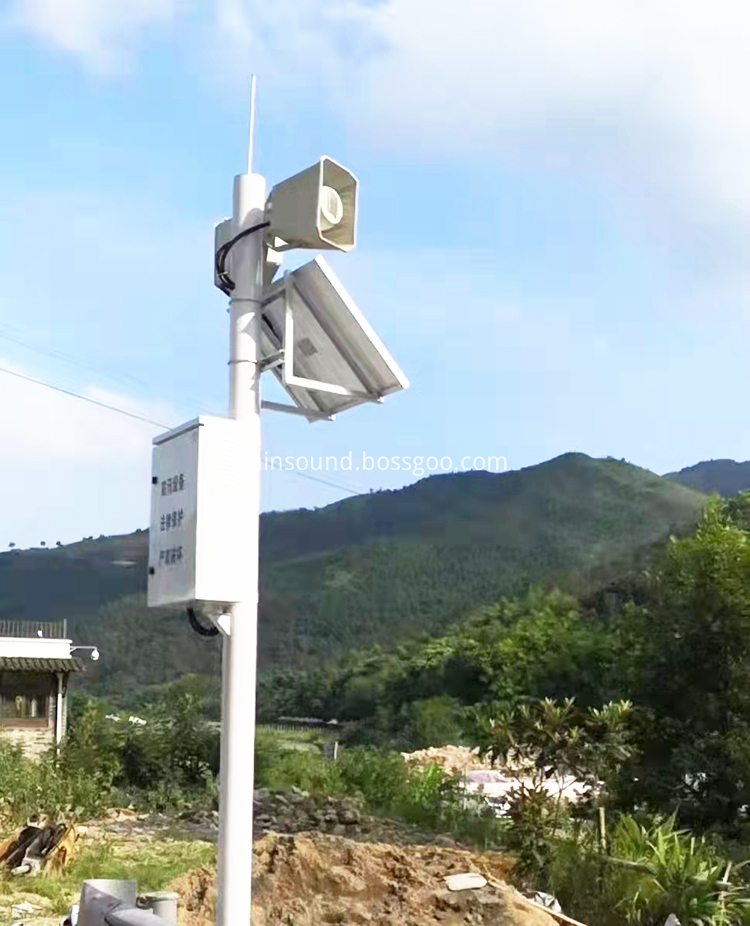
Very simple public address system and features
Public broadcasting is a broadcasting that serves the public within a special scope. Under basic conditions, the public broadcast data signal is transmitted according to the broadcast route arranged in the broadcast service project area, which is generally a unilateral (outgoing) cable television broadcast.
Public broadcasting is generally set in administrative organs, military forces, companies, colleges, communities, business buildings, shopping malls and various exhibition halls to send news and internal information content, publish work and rest time data signals, show music background and its communication system (Paging - for example, broadcasting to find relatives) and forcibly insert emergency broadcasting for extreme weather safety accidents.
Public address system is also effective in wireless data transmission, but it is not popular.
A public address system must at least be equipped with the following stages: broadcast loudspeaker, broadcast power amplifier and microphone.
The low output power broadcasting power amplifier below 100W is generally reserved for the external stage, and does not need to be equipped with a preamplifier, which is also known as a combined broadcasting machine. Broadcast power amplifiers with large output power (such as over hundreds of watts) generally need to be additionally equipped with broadcast preamplifiers. However, whether it is the preamplifier of the combined broadcasting body or the company's discrete broadcasting preamplifier, its key entry must have priority. Generally, at least one microphone is at the top of the list. The data signal of this microphone can automatically suppress other input data signals (that is, it has the function of automatic "silent"), so that the emergency broadcast can be forcibly inserted in the communication system and in case of emergency safety accidents. This is also different from the general HiFi (or technical professional) preamplifier and its mixer.
The professional terms in the system software, such as microphone, route, power amplifier, speaker, etc., are all understood by the general electroacoustic equipment staff or electroacoustic equipment speaker enthusiasts. However, the broadcast route, radio amplifier and loudspeaker are slightly different from the general speaker line, amplifier and loudspeaker.
*Different cables are used
The most significant difference is that the broadcast route is usually very long (500 meters or even kilometers above), while the speaker line of the general professional audio equipment is rarely more than 100 meters. In order to reduce transmission loss, broadcast data signals are normally transmitted by "high voltage/low current" method. Therefore, the broadcast route generally does not need to use the expensive speaker line, but only needs to use the general Category 5 twisted pair; If equipped outdoors, lightning protection equipment shall be added.
*The output mode is different. Let's talk about uniform power amplifier and fixed resistance power amplifier in detail.
Because the system software is transmitted at high voltage, the broadcast power amplifier must show the high voltage data signal. Generally speaking, broadcast power amplifier is embedded with output transformer to improve (or standard) its output voltage, which is called "uniform" power amplifier. The output terminal of the uniform power amplifier is marked with the specification and model of 70V/100V/120V/200V and other allowable output voltage (NormalOutputVoltage), rather than the rated characteristic impedance standard value (Euro) as the technical professional power amplifier. The latter one is also called "constant resistance" power amplifier.