The sound wave in the drum can be approximated as a plane wave, so the wave front at the mouth of the drum can be approximated as piston radiation, so its directionality can be obtained through the piston spokes: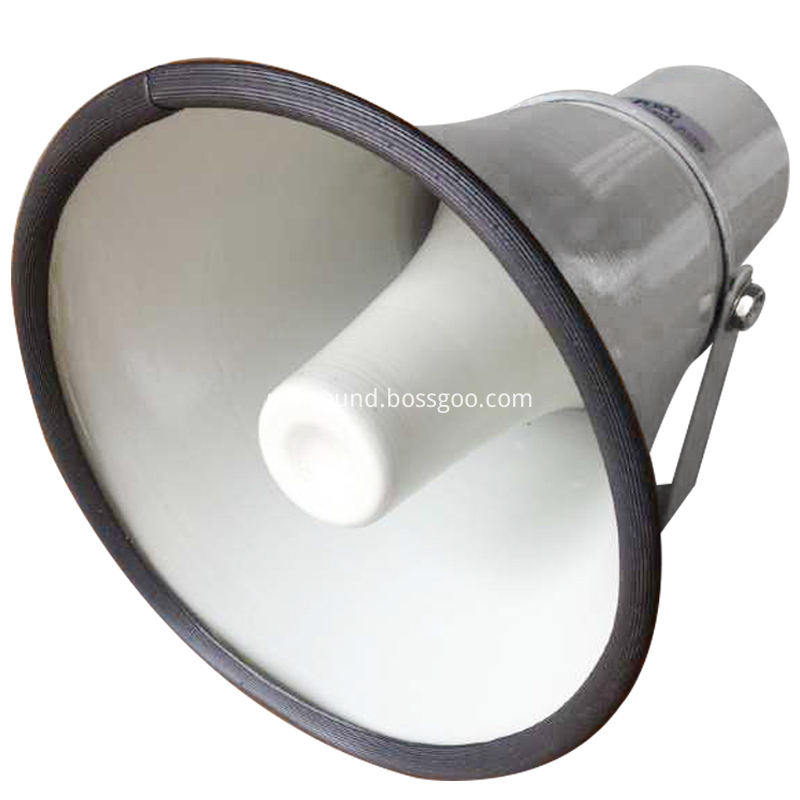
It has no directionality at low frequencies and shows unidirectionality as the frequency of the external electroacoustic signal increases. Since the horn loudspeaker has no low-frequency response, it is unidirectional in its effective frequency range.
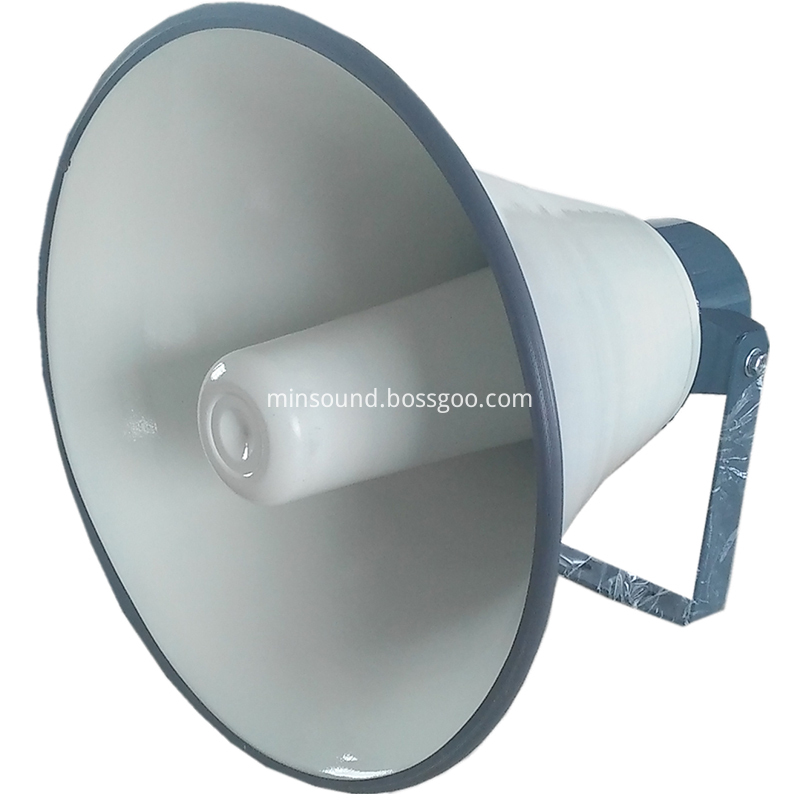
The sound waves in the horn are considered plane waves, but there is a big difference at the mouth of the horn because the wave front here has a large curvature (but not to the extent of a sphere), and therefore its orientation is different. The diameter of the piston is too large.
The main characteristics of this curved wave front are
(1) In a wide range of frequencies, the directionality is elliptical.
(2) the sharpness of the direction is related to the size of the speaker horn. The bigger the horn speaker, the more directional it is. If the frequency response curve is flat, the area of the flare should be large enough to enhance directionality. The directionality can be widened.
The directionality of the horn is also related to the shape of the opening. For trumpets with rectangular openings, the long sides should be placed horizontally when used.